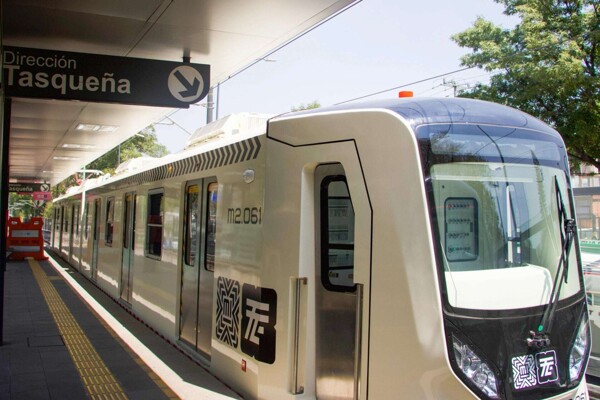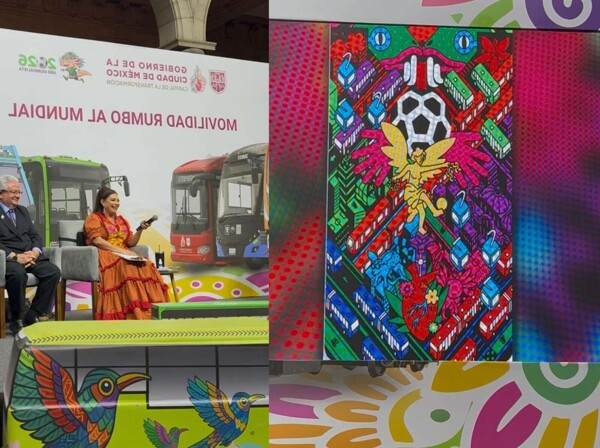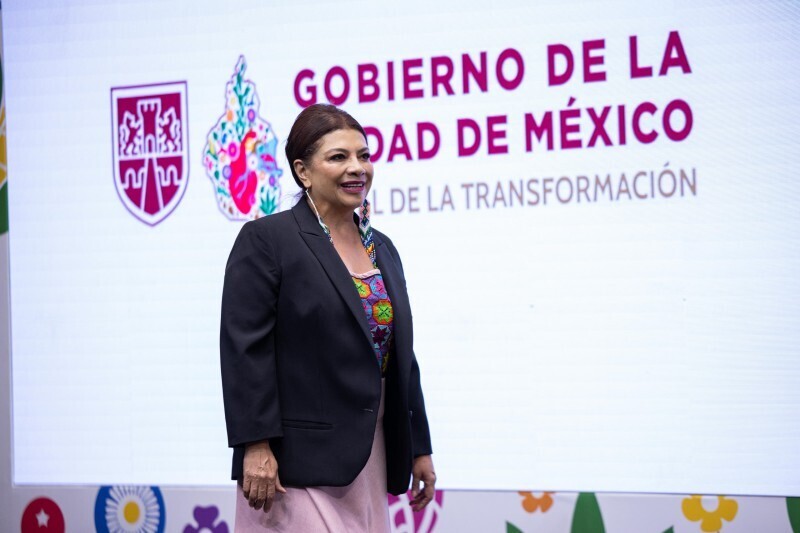
Two months before the start of the World Cup, Head of Government Clara Brugada announced this Wednesday an investment of five billion pesos in various projects aimed at modernizing and expanding mobility and electrification across different services, especially those that reach the vicinity of the Azteca Stadium. In this way, Brugada seeks to bolster the daily mobility of the capital, which serves 21 million people, and also improve travel conditions for tourists who will come to attend the five matches to be held at the Azteca Stadium. The investment will be allocated to various projects. "The goal is clear: for the city to function better, for people to arrive faster and with greater safety," she stated. Brugada also announced 4,500 housing units in the Historic Center and a new rent law. The director of the Metro, Adrián Ruvalcaba, reported that authorities are carrying out major maintenance on Line 2—which goes to Taxqueña—with an investment of 1.5 billion pesos. Additionally, seven stations along the line have been modernized, and 17 new light trains have been acquired for an investment of 1.4 billion pesos. In turn, the Secretary of Mobility, Héctor Ulises García, highlighted that with these investments, a bet will be placed on electrification, which will allow for improvements while protecting the environment, and that it will seek to reduce waiting times by up to 30%. This will, he anticipated, increase the number of trains from the current 28 units to 32 through the rehabilitation of the braking system, doors, lighting, and mechanical components, as well as tracks, ties, and rails to reduce vibrations. As reported earlier, the city government is already allocating a large part of its projects to the World Cup, which will begin on June 11. "If the government invests in the mobility that transports millions of inhabitants for their daily activities, we are investing in well-being, in time saved for the population, and in the reduction of inequalities," she assured during the press conference she led this Wednesday alongside the Secretary of Mobility, Héctor Ulises García Nieto, and the officials in charge of the different services such as the Metro, Metrobús, Cablebús, Light Rail, and the Passenger Transport Network (RTP). Araceli Damián leaves Brugada's cabinet and is succeeded by Pablo Yanes in the Secretariat of Welfare. As explained by the former mayor of Iztapalapa, the total investment will amount to 5 billion 183 million pesos, which includes 500 million from federal coffers. Among them, for example, is the modernization of the Light Rail, which will allow for doubling the number of trains and reducing travel times to the South of the city. This transport will be one of the most important during the world championship, considering that it reaches the stadium and the CETRAM Huipulco, where the government will establish one of the key hubs of mobility. The Head of Government, Clara Brugada, during the mobility announcements this Wednesday. In this regard, the director of the Electric Transport Service, Martín López Delgado, detailed that the investment also allocated 150 million pesos to improve the Taxqueña station, which will begin operating in May with three platforms in total. One of the main issues is security, for which authorities are already coordinating with the 16 boroughs of the capital and the federal secretariat headed by Omar García Harfuch. Another main issue is mobility, for which the ruling party is working to complete the various works and fulfill the promises made in recent times on time.